

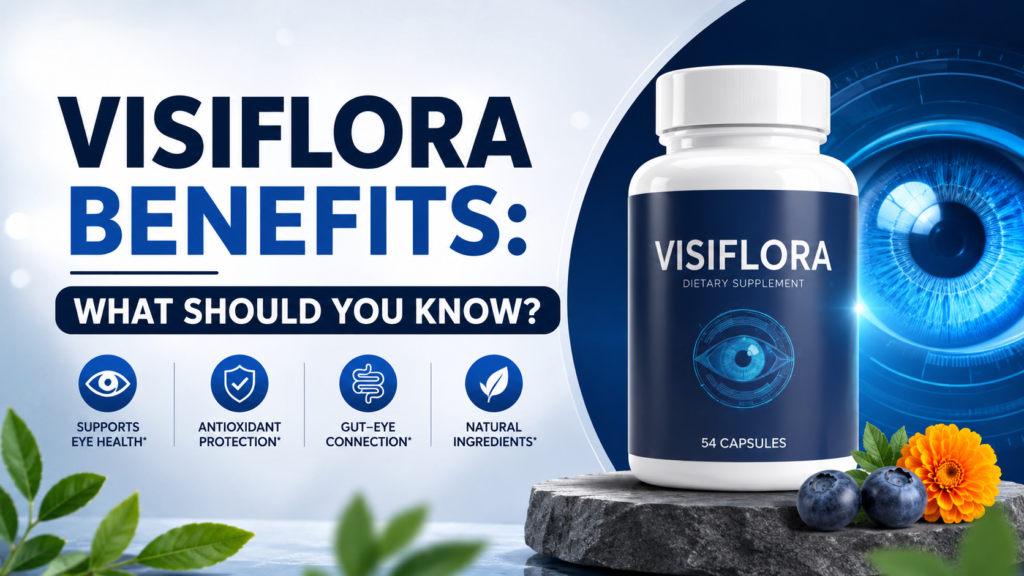
VisiFlora Benefits: What Should You Know?
Your eyes work hard every day, especially if you spend hours looking at computers, smartphones, televisions, or other digital screens. Along with regular eye exams, good nutrition and healthy daily habits can play an important role in maintaining your vision.
VisiFlora benefits are marketed around a different approach to daily eye support. According to the product’s official website, VisiFlora combines 22 ingredients and focuses on both vision-supporting nutrients and what the company calls the “gut-eye” connection.
The formula reportedly contains familiar eye-health nutrients such as lutein, zeaxanthin, astaxanthin, bilberry extract, and vitamins A, C, and E. However, it is important to separate the known roles of individual nutrients from claims about the finished VisiFlora product itself.
Here are seven potential ways its ingredients may fit into an eye-health routine.
1. Provides Lutein and Zeaxanthin for Eye Support
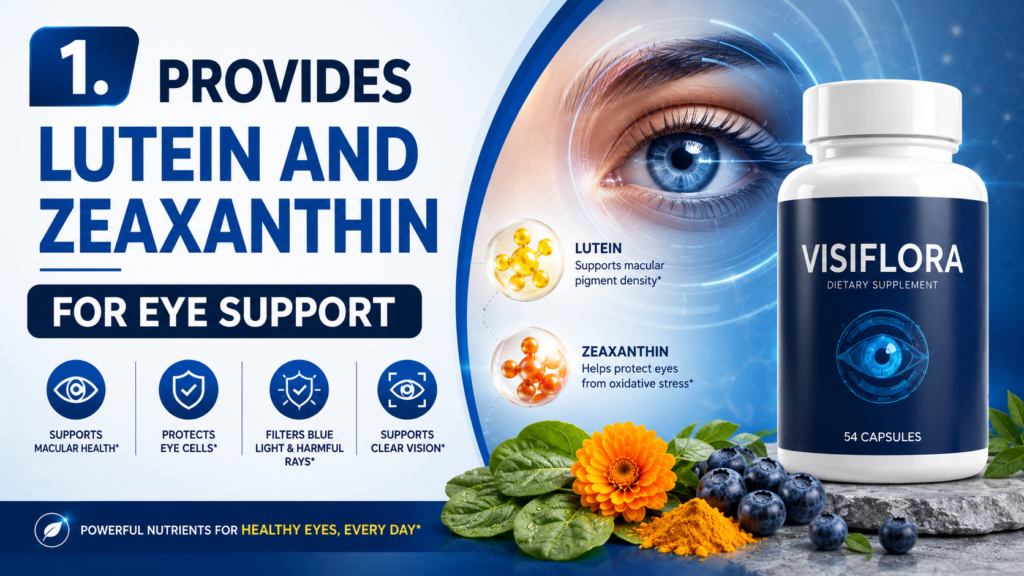
One of the most notable features of VisiFlora is its inclusion of lutein and zeaxanthin.
These carotenoids naturally accumulate in the retina, particularly around the macula. They are also found in foods such as spinach, kale, broccoli, peas, corn, and egg yolks.
According to the National Eye Institute (NEI), lutein and zeaxanthin have been studied extensively through the AREDS2 research program. The research is especially relevant to certain people with age-related macular degeneration (AMD).
That does not mean every supplement containing these nutrients has been proven to prevent eye disease. The specific amounts and combinations used in clinical studies matter.
Why are these nutrients important?
Lutein and zeaxanthin are concentrated in eye tissue and can:
- Act as antioxidants
- Help filter certain wavelengths of light
- Contribute to macular pigment
- Support normal retinal function
Their presence makes them two of the most recognizable ingredients in many eye-health supplements.
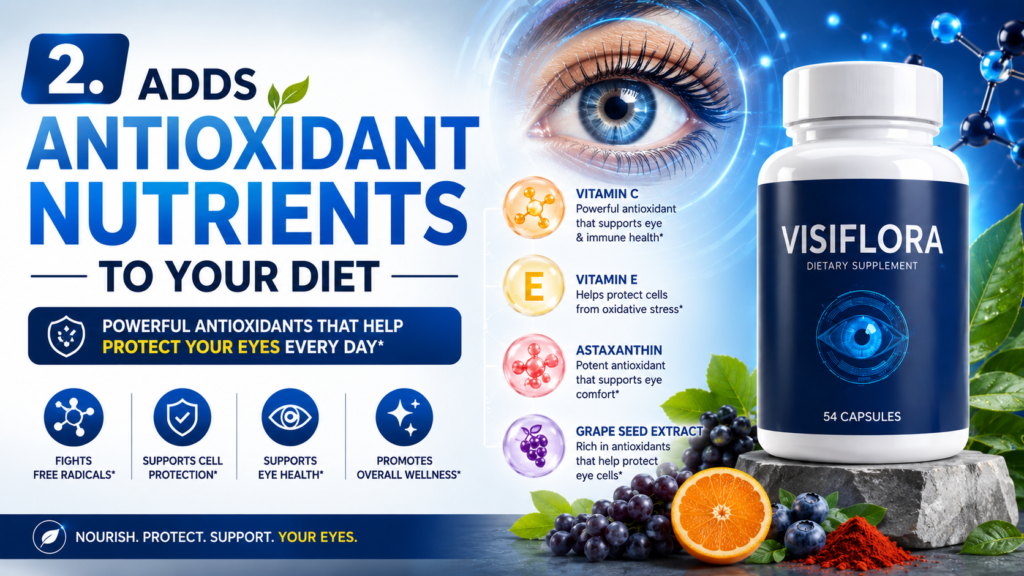
2. Adds Antioxidant Nutrients to Your Diet
Oxidative stress occurs when reactive molecules known as free radicals exceed the body’s antioxidant defenses.
The eyes can be exposed to oxidative stress because of their high metabolic activity and exposure to light. This is one reason antioxidants receive significant attention in nutrition research related to healthy vision.
VisiFlora lists several antioxidant-related ingredients, including lutein, zeaxanthin, astaxanthin, grape seed extract, and vitamins C and E.
What do antioxidants do?
Antioxidants help protect cells against oxidative damage.
For example, vitamin C is an antioxidant and an essential nutrient needed for several normal body functions. Vitamin E also contributes to antioxidant protection.
The important distinction is that antioxidant activity does not automatically mean a supplement can treat or prevent an eye condition.
Think of these nutrients as part of nutritional support rather than a replacement for professional eye care.
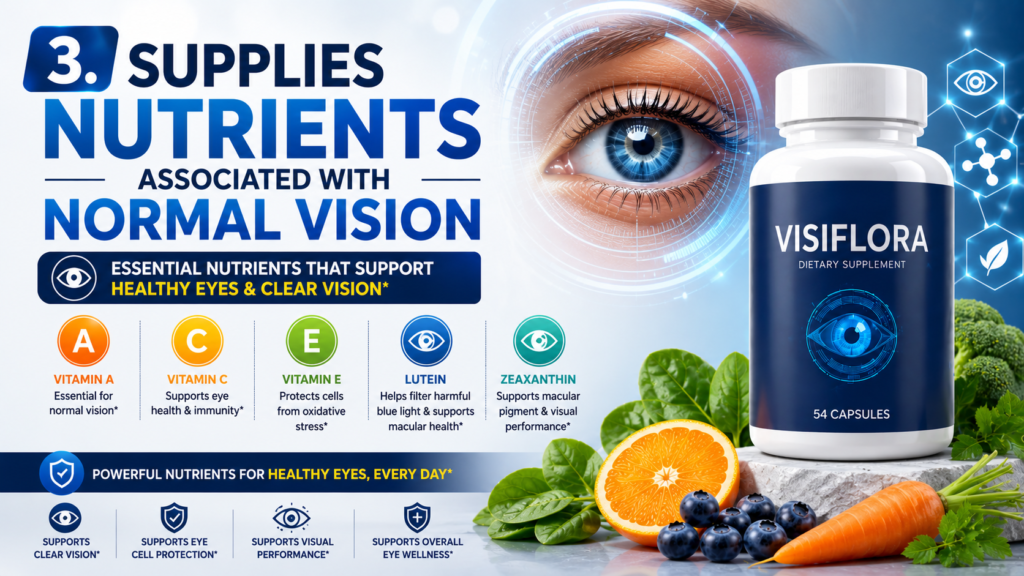
3. Supplies Nutrients Associated With Normal Vision
Another potential advantage of VisiFlora is that it brings several nutrients together in one formula.
According to its manufacturer, the formula includes vitamins A, C, and E alongside carotenoids and botanical ingredients.
Vitamin A is particularly important for normal vision. It plays a role in the processes that allow the eye to respond to light.
A balanced diet can provide many of these nutrients through foods such as:
- Carrots and sweet potatoes
- Dark leafy green vegetables
- Eggs
- Citrus fruits
- Nuts and seeds
- Colorful fruits and vegetables
A supplement can complement nutrition when appropriate, but it should not be treated as a substitute for a balanced diet.
4. May Complement a Healthy-Aging Eye Routine
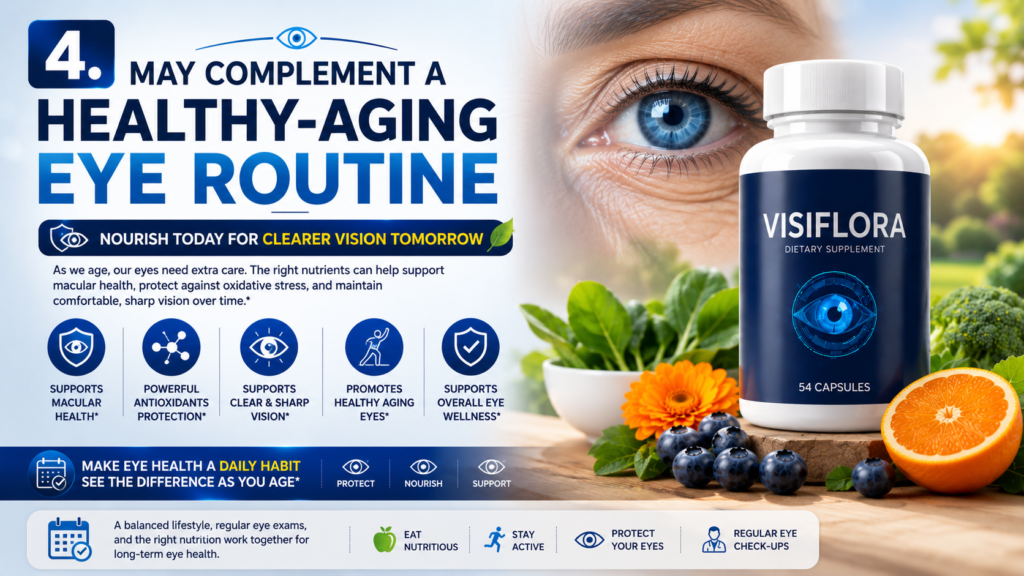
Vision naturally changes as we get older.
Some people notice difficulty focusing on nearby objects, greater sensitivity to glare, or the need for more light while reading. Age is also a major risk factor for several eye conditions.
This makes nutrition an important area of research.
The strongest evidence for specific high-dose eye supplements comes from the National Eye Institute’s AREDS and AREDS2 trials. Researchers found that the tested AREDS formulations can reduce the risk of progression from intermediate to advanced AMD by about 25% in appropriate patients.
However, that finding should not be applied automatically to VisiFlora.
AREDS2 is a specific formulation containing defined amounts of vitamin C, vitamin E, zinc, copper, lutein, and zeaxanthin. The NEI also states that these formulas do not prevent AMD from developing in people without the appropriate stage of the disease.
Therefore, one of the more realistic potential VisiFlora benefits is simply providing several nutrients associated with eye nutrition as part of a broader healthy-aging routine.
5. Takes a Gut-Eye Approach to Nutritional Support
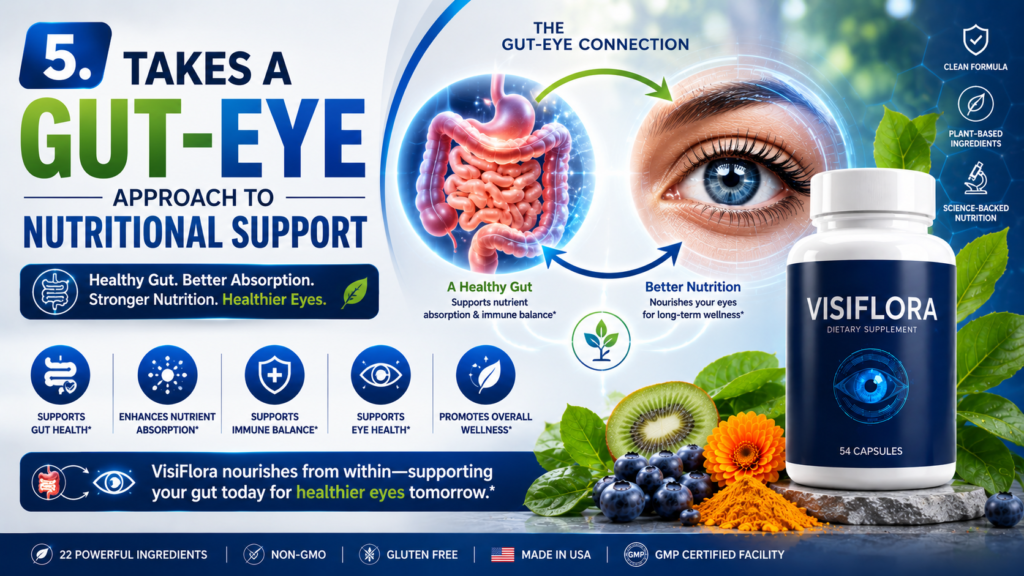
VisiFlora’s main marketing difference is its emphasis on what the manufacturer describes as gut-eye support.
The idea is based on the broader relationship between digestion, nutrient absorption, inflammation, metabolism, and overall health.
Your digestive system has to break down food and make nutrients available before the body can use many of them. Good digestive health therefore matters for overall nutrition.
VisiFlora’s manufacturer says its formula is designed to support nutrient absorption alongside eye health.
Is the gut-eye connection proven?
Research into the gut microbiome and eye health is an evolving scientific field. Researchers are studying whether gut microorganisms and immune activity could be associated with certain eye conditions.
However, emerging research into a biological pathway should not be interpreted as proof that a particular commercial supplement improves eyesight through that pathway.
Consumers should therefore view VisiFlora’s gut-eye positioning as a product concept rather than an established treatment for eye disease.
6. May Support Daily Visual Comfort
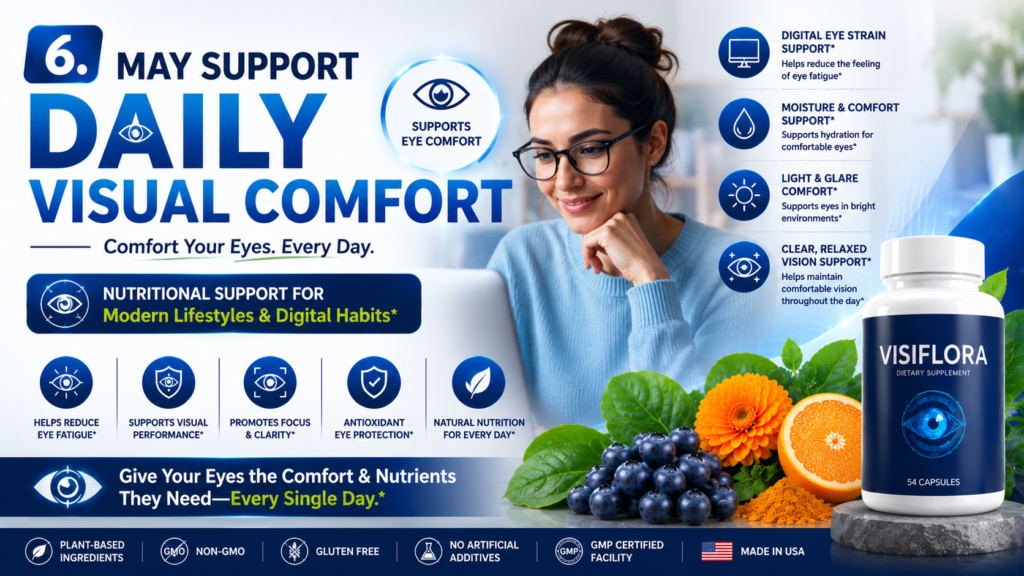
Long hours in front of screens can leave your eyes feeling tired.
Common symptoms associated with extended screen use can include:
- Dry or uncomfortable eyes
- Temporary blurred vision
- Headaches
- Difficulty focusing
- General eye fatigue
VisiFlora is marketed for daily visual comfort and eye strain support.
However, supplements are only one consideration when dealing with screen-related discomfort.
Simple habits may be more immediately useful. Take regular breaks, blink frequently, reduce glare, adjust your screen brightness, and make sure your glasses or contact-lens prescription is current.
If eye strain, blurry vision, pain, redness, or headaches continue, schedule an eye examination instead of relying only on supplements.
7. Makes Multiple Eye-Support Nutrients Convenient
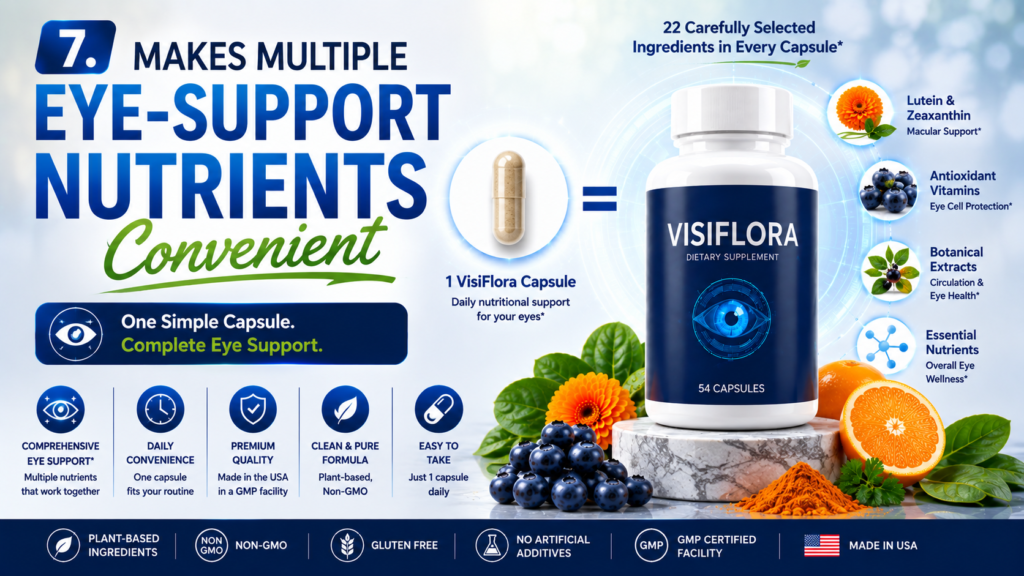
Convenience is an overlooked potential benefit of multi-ingredient supplements.
Instead of buying lutein, zeaxanthin, vitamins, and other ingredients separately, a combined formula puts multiple ingredients into a single daily product.
VisiFlora’s manufacturer says the product contains 22 selected ingredients and describes it as plant-based, non-GMO, gluten-free, and free from artificial additives. The company also states that it is manufactured in the United States in a GMP-certified facility.
These characteristics may matter to shoppers comparing eye supplements.
However, more ingredients do not automatically make a product more effective. Dosage, formulation, ingredient interactions, manufacturing quality, and clinical evidence are more important than the ingredient count alone.
What Ingredients Are Behind the VisiFlora Benefits?
According to the current manufacturer information, some of the main VisiFlora ingredients promoted for vision support include:
- Lutein: A carotenoid found naturally in the retina
- Zeaxanthin: Works alongside lutein and contributes to macular pigment
- Astaxanthin: A carotenoid with antioxidant properties
- Vitamin A: Essential for normal visual function
- Vitamin C: An essential antioxidant nutrient
- Vitamin E: Helps protect cells against oxidative stress
- Bilberry extract: A botanical commonly included in vision supplements
- Ginkgo biloba: A botanical ingredient used in various supplements
- Grape seed extract: A source of plant compounds with antioxidant activity
The manufacturer associates these ingredients with several areas of eye and general nutritional support.
Remember that evidence for an individual ingredient does not prove that the complete VisiFlora formula produces the same result.
VisiFlora vs. AREDS2: Are They the Same?
No.
This distinction is particularly important for anyone researching supplements for age-related macular degeneration.
AREDS2 is a scientifically studied formulation containing specific doses of vitamin C, vitamin E, zinc, copper, lutein, and zeaxanthin. The National Eye Institute says AREDS2 supplements can help certain people with intermediate or late AMD slow disease progression.
VisiFlora is a separate commercial supplement with its own ingredient blend.
Consumers should therefore not assume VisiFlora provides the clinically demonstrated benefits of AREDS2 simply because some ingredients overlap.
If you have AMD, glaucoma, cataracts, diabetic eye disease, or another diagnosed eye condition, ask an ophthalmologist or other qualified healthcare professional which supplements, if any, are appropriate for you.
Who Might Consider VisiFlora?
VisiFlora may appeal to adults looking for a convenient supplement containing several eye-health nutrients, particularly lutein and zeaxanthin.
It may also interest people researching:
- Daily eye nutrition
- Antioxidant support
- Lutein and zeaxanthin supplements
- Nutrition for healthy aging
- Supplements marketed for visual comfort
Still, supplements should complement—not replace—healthy habits.
The National Eye Institute recommends broader steps for protecting eye health, including eating healthy foods, staying physically active, managing relevant health conditions, and receiving appropriate eye care.
What to Know Before Taking VisiFlora
Before starting any dietary supplement, read the complete Supplement Facts label rather than relying only on promotional claims.
Check the amounts of individual vitamins, minerals, herbs, and other active ingredients. Compare them with supplements you already take to reduce the chance of unnecessarily doubling up on certain nutrients.
You should be especially careful if you:
- Take prescription medications
- Already use another eye supplement or multivitamin
- Have a diagnosed medical or eye condition
- Are pregnant or breastfeeding
- Have previously experienced reactions to supplements
The NEI advises people to talk with a healthcare professional before starting supplements, particularly because high-dose vitamins and minerals can interact with medications or create other risks.
Are VisiFlora Benefits Scientifically Proven?
This is where consumers need to distinguish ingredient evidence from product evidence.
There is established scientific research on several nutrients used in eye-health supplements. Lutein and zeaxanthin, for example, have been investigated in major clinical research such as AREDS2.
But evidence supporting an ingredient does not automatically prove every supplement containing that ingredient delivers a specific clinical outcome.
When evaluating VisiFlora, consider three questions:
- What does the manufacturer claim?
- What research exists for the individual ingredients and doses?
- Are there peer-reviewed clinical trials testing the complete VisiFlora formula?
This approach can help you separate promising nutritional ingredients from marketing claims.
Conclusion: Is VisiFlora Worth Considering for Eye Health?
The main potential VisiFlora benefits come from its combination of familiar eye-support nutrients, including lutein, zeaxanthin, antioxidant vitamins, astaxanthin, and botanical extracts. Its multi-ingredient approach may offer a convenient option for people looking to complement an eye-healthy lifestyle.
At the same time, VisiFlora should not be viewed as a proven treatment for eye disease or assumed to provide the same benefits as clinically studied AREDS2 formulations.
Before buying, review the complete ingredient label, consider your existing diet and supplements, and speak with an eye-care professional if you have vision problems or a diagnosed eye condition. Good eye health is built on more than one supplement—nutrition, healthy habits, regular eye exams, and appropriate medical care all matter.