

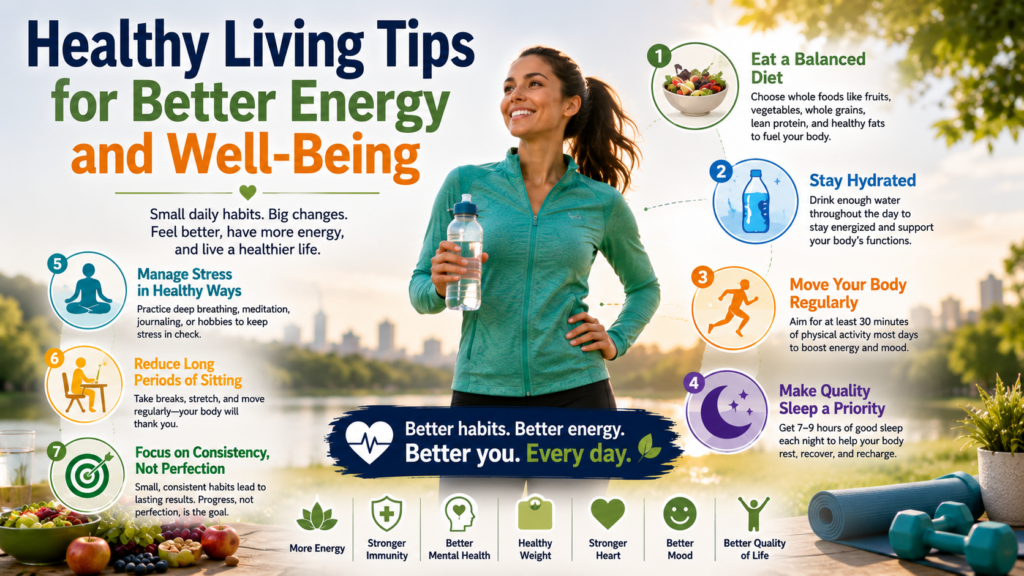
Discover 7 healthy living tips to support better energy and well-being, from balanced meals and exercise to quality sleep, hydration, and stress care.
Feeling energetic and well often comes down to the small choices you make every day. These healthy living tips focus on practical habits—like eating balanced meals, staying active, sleeping well, and managing stress—that can support your physical and mental well-being over time.
You do not need to completely change your lifestyle overnight. Start with one or two habits that feel realistic, practice them consistently, and build from there.
1. Eat a Balanced and Nutrient-Rich Diet

Good nutrition gives your body the energy and nutrients it needs for everyday activities. Rather than following a highly restrictive diet, aim for a balanced eating pattern that includes a variety of nutrient-rich foods.
Try to include:
- Fruits and vegetables
- Whole grains
- Beans and legumes
- Nuts and seeds
- Lean sources of protein
- Dairy or suitable alternatives
- Sources of healthy unsaturated fats
Build a Balanced Plate
A simple approach is to make vegetables and fruits a large part of your meals, then add a source of protein and whole-grain or other fiber-rich carbohydrates.
For example, a balanced lunch could include brown rice, grilled chicken or beans, mixed vegetables, and a piece of fruit.
Protein can help with fullness and supports muscle maintenance and repair. Carbohydrates are an important source of energy, while healthy fats play several roles in normal body function.
You do not have to label individual foods as completely “good” or “bad.” Your overall eating pattern matters more than one meal or snack.
2. Stay Hydrated Throughout the Day

Hydration is another important part of healthy living. Your body needs water for temperature regulation, digestion, circulation, and many other normal functions.
Fluid needs vary depending on factors such as your body size, activity level, climate, diet, pregnancy status, and overall health.
Simple Ways to Drink More Water
If you regularly forget to drink water, try these practical strategies:
- Keep a reusable water bottle nearby.
- Drink water with your meals.
- Have water before, during, and after exercise as needed.
- Eat water-rich foods such as watermelon, oranges, cucumbers, and soups.
- Drink more fluids during hot weather or prolonged physical activity.
Do not feel that everyone needs to follow one exact number of glasses per day. Individual hydration requirements can differ significantly.
Water is usually a good everyday beverage choice because it hydrates without adding sugar or calories.
3. Move Your Body Regularly

One of the most effective healthy living tips is also one of the simplest: move more.
Regular physical activity supports cardiovascular health, muscle and bone health, physical function, sleep, and mental well-being. You also do not have to spend hours in a gym to become more active.
Walking, cycling, swimming, dancing, strength training, recreational sports, and home workouts can all contribute to an active lifestyle.
How Much Exercise Should You Get?
For adults, widely used public-health guidelines recommend at least 150 minutes of moderate-intensity aerobic activity per week, or 75 minutes of vigorous activity, or an equivalent combination.
Adults are also generally encouraged to perform muscle-strengthening activities involving major muscle groups on at least two days per week.
If 150 minutes sounds overwhelming, start smaller.
You might begin with a 10- or 15-minute walk and gradually increase your activity. Some movement is better than none, especially when you are building a new routine.
Make Movement Part of Everyday Life
Exercise is not the only way to stay active. Look for opportunities to move throughout your normal day.
For example:
- Walk during a break.
- Take the stairs when practical.
- Stretch after sitting for long periods.
- Walk short distances instead of driving when possible.
- Do simple bodyweight exercises at home.
- Turn household chores into opportunities for movement.
The best activity is often one you enjoy enough to keep doing consistently.
4. Make Quality Sleep a Priority
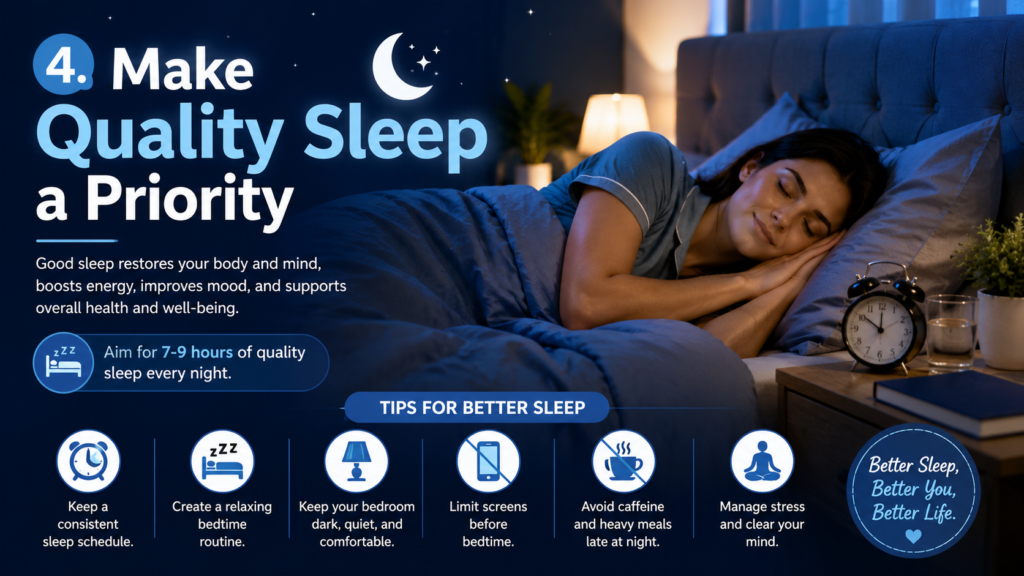
Sleep can easily get pushed aside when life becomes busy, but it plays an important role in overall health and daily functioning.
For most adults, experts generally recommend getting at least seven hours of sleep per night, although individual needs can vary.
Not getting enough quality sleep may leave you feeling tired and make it harder to concentrate or perform at your best during the day.
Create a Better Sleep Routine
Good sleep habits do not need to be complicated.
Consider trying these strategies:
- Keep your bedtime and wake-up time fairly consistent.
- Make your bedroom dark, quiet, and comfortable.
- Create a relaxing routine before bed.
- Limit bright screens close to bedtime when possible.
- Avoid large meals right before sleeping.
- Be mindful of caffeine later in the day.
- Exercise regularly, but find a timing that works well for you.
Instead of trying to perfect your sleep routine immediately, change one habit at a time.
If sleep problems are persistent, severe, or affecting your daily life, consider discussing them with a qualified healthcare professional.
5. Manage Stress in Healthy Ways
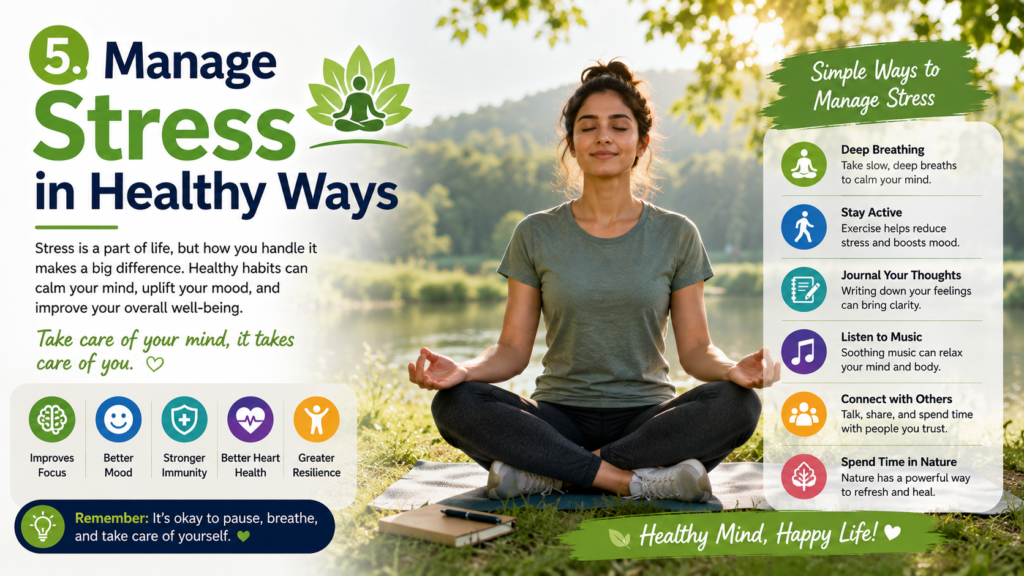
Stress is a normal part of life. However, ongoing stress can affect how you feel physically and emotionally.
Learning how to respond to stress is therefore an important part of maintaining a healthy lifestyle.
Different strategies work for different people, so experiment until you find healthy approaches that fit your routine.
Simple Stress-Management Ideas
You could try:
- Taking a short walk outdoors
- Practicing slow breathing
- Meditating
- Listening to relaxing music
- Writing in a journal
- Spending time on a hobby
- Talking with someone you trust
- Taking planned breaks from work
- Spending time in nature
Physical activity can also be a useful way to support mood and manage everyday stress.
Avoid expecting yourself to eliminate stress completely. A more realistic goal is to develop healthy ways to manage stressful situations when they arise.
If stress, anxiety, or low mood becomes persistent or interferes with everyday functioning, professional support may be appropriate.
6. Reduce Long Periods of Sitting
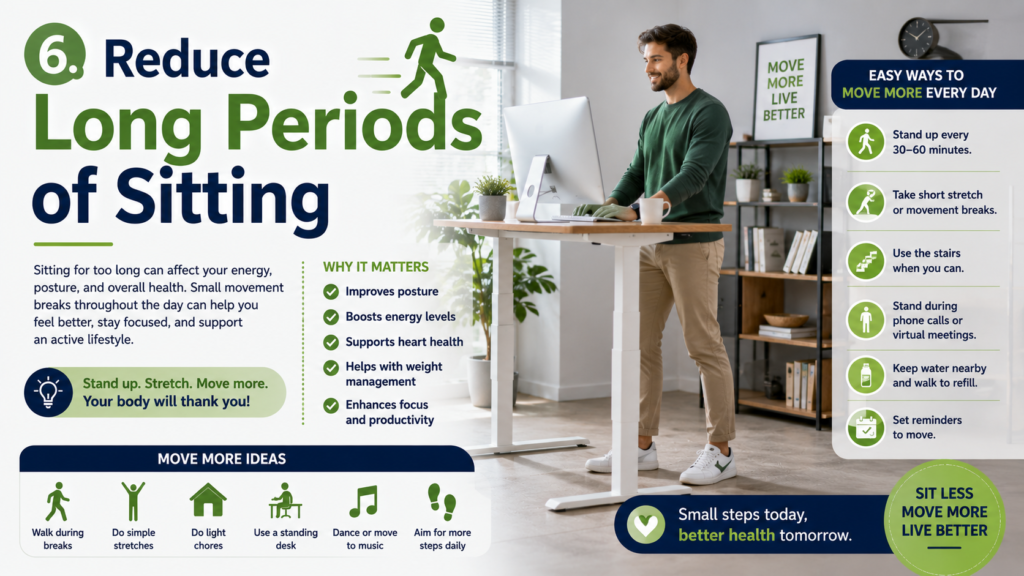
Even if you exercise regularly, you may still spend a large part of your day sitting—especially if you work at a desk.
Breaking up long periods of sedentary time gives you more opportunities to move during the day.
Try the “Move More” Approach
You do not necessarily need another full workout. Instead, add small movement breaks throughout your routine.
For example:
- Stand up during some phone calls.
- Walk for a few minutes during breaks.
- Stretch between work tasks.
- Take a short walk after lunch.
- Use stairs when practical.
- Perform a few bodyweight movements during breaks.
You could also set a reminder to stand or move periodically if you tend to lose track of time while working.
The goal is simple: sit less and move more when you can.
Small amounts of movement may not feel significant individually, but they can help create a more active daily routine.
7. Focus on Consistency, Not Perfection
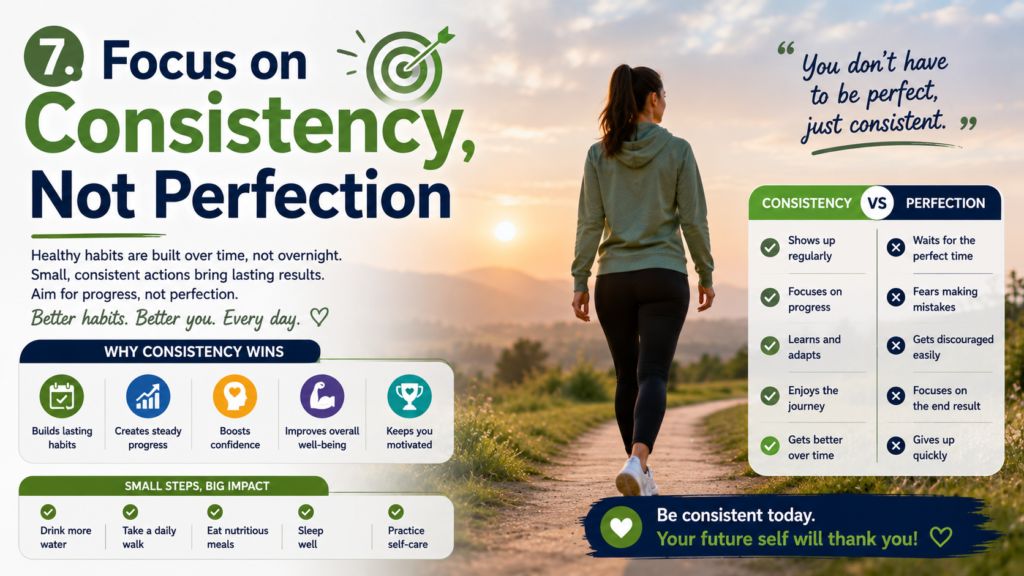
Perhaps the most overlooked of these healthy living tips is consistency.
People often start a new health routine with ambitious goals. They may completely change their diet, begin exercising every day, set an early bedtime, and try to eliminate every unhealthy habit at once.
That approach can be difficult to maintain.
Instead, focus on realistic changes that fit your life.
Start With Small Healthy Habits
Rather than saying:
“I need to become healthier.”
Choose a specific action, such as:
- Walk for 20 minutes after dinner.
- Add vegetables to lunch.
- Carry a water bottle to work.
- Go to bed at a consistent time.
- Prepare tomorrow’s breakfast tonight.
- Take a five-minute movement break during the workday.
These goals are easier to understand, measure, and repeat.
Once one behavior becomes part of your routine, you can add another.
Do Not Let One Bad Day Stop You
Healthy living does not require perfection.
You may occasionally miss a workout, stay up late, eat more than planned, or forget to drink enough water. One day does not define your overall lifestyle.
Simply return to your usual habits at the next reasonable opportunity.
Long-term health habits are built through patterns, not perfect streaks.
How to Build a Simple Healthy Daily Routine
Knowing what to do is useful, but turning advice into a routine is what makes it practical.
Here is one example of how healthy habits could fit into a normal day.
Morning
Start your morning with water and a balanced breakfast if breakfast suits your routine.
A meal containing protein, fiber-rich carbohydrates, fruit, or vegetables can provide useful nutrients and help you begin the day with a balanced approach.
You could also spend a few minutes stretching or walking.
During the Day
Avoid remaining in the same position for hours at a time. Take short movement breaks and keep water accessible.
For lunch, aim for a meal that combines vegetables, a protein source, and fiber-rich carbohydrates.
If you need a snack, options such as fruit, yogurt, nuts, or vegetables can provide useful nutrients.
Evening
Use the evening to slow down.
A short walk after dinner can add movement to your day. Later, reduce stimulating activities and create a relaxing routine that prepares you for sleep.
This does not need to happen perfectly every day. Think of it as a flexible framework rather than a strict schedule.
Why Small Lifestyle Changes Matter
People sometimes assume that improving their health requires dramatic changes. In reality, sustainable habits are often built through smaller choices repeated over time.
A 15-minute walk may eventually become 30 minutes. Adding vegetables to one meal may encourage you to improve another. Going to bed 20 minutes earlier may become part of a more consistent sleep schedule.
This is why a healthy lifestyle is better viewed as an ongoing process rather than a short-term challenge.
Focus on habits you can realistically continue.
Conclusion
Better well-being does not require a complicated routine. Eating a balanced diet, staying hydrated, moving regularly, getting enough sleep, managing stress, reducing sedentary time, and focusing on consistency can all contribute to a healthier lifestyle.
Choose one or two of these healthy living tips and start small this week. The goal is not to create the “perfect” routine—it is to build healthier habits that you can maintain over time.